Players comparing reward-led casinos start with the headline figure. Cash Out Mission’s AUD reward-winnings model takes the opposite route: an auditable cash-out path, mobile search and plain-English AUD screens come first. That makes it easier to assess on a Tuesday arvo, rather than through a bonus banner. For an Australian audience, the casino review at ozwincasinoreview.net is a useful companion when separating interface design from offshore access rules.
Cash Out Mission is assessed on product design, with no claim of an Australian licence or regulation for offshore casino play.
Put Cash-Out Before Bonus Noise
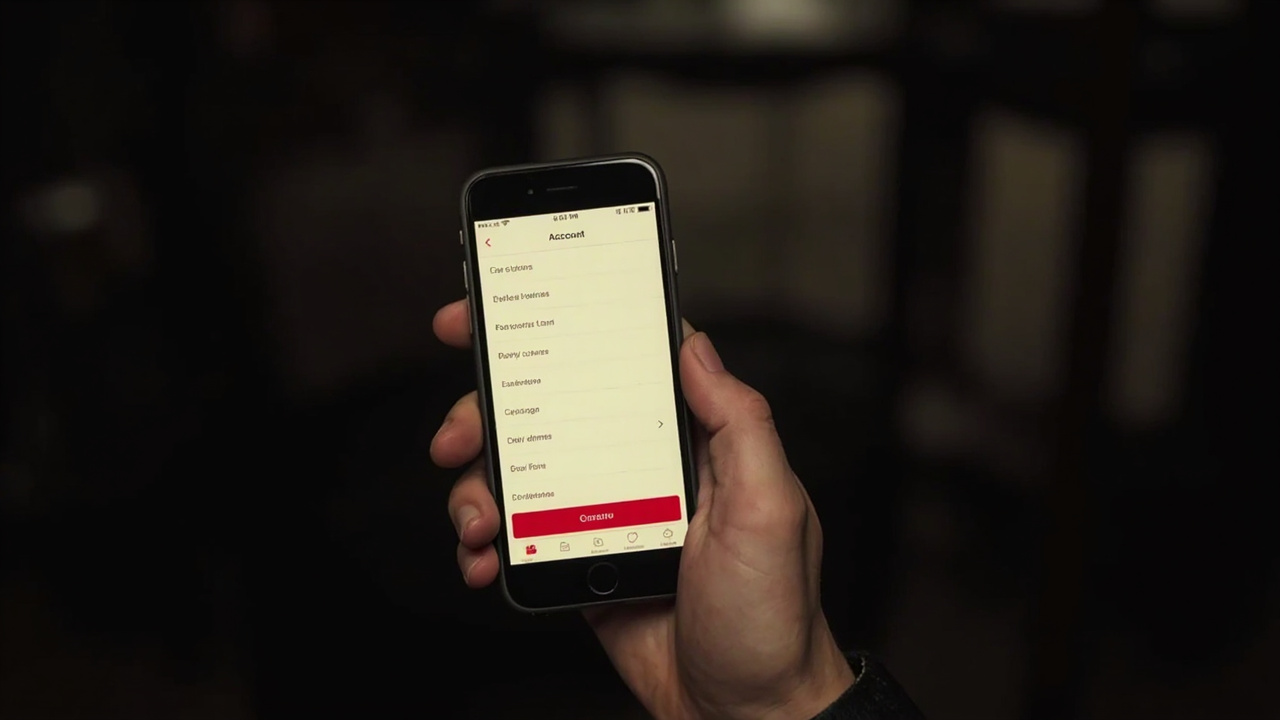
Most reward-first interfaces treat the bonus as hero content and leave cash-out for later. Cash Out Mission reverses that hierarchy. Its home screen opens on two balances – Reward Credit and Withdrawable Balance in AUD – then places Cash Out beside the next mission. A player can see what is playable, what is still subject to mission rules and what can leave the wallet before touching a game.
That hierarchy matters in Australia; a loud promotional carousel can hide the useful arithmetic. Through my Easygo FP&A, accounting and tax lens, I would ask whether one ledger reconciles reward credits, game wagers and transfer requests. The $50 Reward Credit becomes eligible after the listed mission; the player cashes out $30, while the $20 reserve remains locked. No promise is made about approval or timing.
The visual identity uses navy, eucalyptus green and amber status chips, with generous controls. Localisation is practical: search accepts game, provider or market wording; filters distinguish slots, live tables, roulette and sportsbook. Currency stays AUD in the primary view unless deliberately changed. Against the UK’s multi-currency lobby or Europe’s dense game grids, the Australian presentation is stronger on immediate arithmetic, defo, but keeps terms close.
The Cash-Out Mission, Balance by Balance
Start with the rules, not the reward pitch
Registration asks for mobile number, email and date of birth, then identity checks before a cash-out request. That is KYC control, not a way around verification. The lobby labels items Reward Credit, Mission Point or Withdrawable Balance, exposing the 60% settlement rule in the terms panel.
The weekly ladder lets players opt into one mission, play eligible titles from Copperline, Harbourline Live or Fieldmark Sports and meet the turnover. A $50 Reward Credit settles as $30 eligible winnings plus a $20 reserve. Mission Points are the loyalty layer: players earn one point per $1 of net eligible play, and 100 points convert to $1 after the weekly cycle. That is accounting clarity, not a guaranteed return. Amounts are AUD.
Find the right game without a treasure hunt
On mobile, search is a control, not decoration. Enter “blackjack”, “Fieldmark” or “live roulette”; results retain AUD stakes, volatility and cash-out status. Filters say slots, live tables, roulette and sportsbook, while Recent stores six titles. Copperline supplies slots, Harbourline Live blackjack and roulette, and Fieldmark Sports pre-match and in-play markets. That suits a Western Sydney commuter checking a market between trains, not a desktop player hiding fees.
Check the route before committing
Cash-out requests start at $20 and cap at $500 per calendar day. Payout options are PayID and bank transfer, with card deposits; verification must be complete. The stated window is one to three business days after approval, not a payout promise. Live chat is 24/7, and email is answered by the next Australian business day. Mission Points never replace AUD cash.
| Check | Screen information | Cash-out consequence |
|---|---|---|
| Registration | Mobile, email, date of birth | Identity check before first request |
| Mission | One active mission; eligible providers | $50 Reward Credit becomes $30 eligible, $20 reserve |
| Payment | AUD wallet; card deposit; PayID or bank transfer | $20 minimum, $500 daily cap |
| Timing | “After approval” status visible | One to three business days stated, never guaranteed |
UK lobbies expose currency switches; European layouts push payments into a footer. Cash Out Mission chooses an AUD-first ledger, trading choice for fewer reconciliation errors. From an Easygo FP&A perspective, that beats a catalogue with hidden fees.

Who Fits the AUD-First Routine
Cash Out Mission is built for adults aged 18+ who want to see the cash-out path before browsing. It suits someone in Parramatta checking live blackjack on a phone, trying a Copperline slot at Sydney Olympic Park, or checking a Fieldmark sportsbook market before weekend footy. AUD-first balances, visible locked amounts and one search box take some of the busy as out of a multi-currency lobby. They help with budgeting, not profit.
It is less compelling for someone wanting a huge catalogue, instant crypto withdrawals or bonus terms that never need reading. The 60% settlement rule, $20 minimum, $500 daily cap and one-to-three-business-day post-approval window require patience and records. The choice is matching the interface to a bank-transfer habit and a responsible limit, not chasing a bigger number.
James Clarke, Payments Strategy Director, Southern Cross Gaming Advisory, says, “A cash-out proposition earns trust when the approval state is visible, not when a green button promises speed.” As Peter Hughes, I would call this a stronger operator-side proposition for iGaming and sportsbook finance than an opaque bonus, while tax treatment still needs proper records and advice.

Cash Out Mission’s appeal is procedural rather than promotional: AUD is visible, locked value is explained, and the player can judge the route before committing. It is a sensible alternative for adults who prioritise mobile search, predictable balance labels and bank-transfer discipline over catalogue size. The trade-off is slower, more deliberate access to cash. Check the terms, set limits, verify identity and treat any reward as a possibility rather than a guaranteed outcome.